Industry partner delivering innovative and sustainable chemical solutions

Industry partner delivering innovative and sustainable chemical solutions

Catalysis is one of the key to the development of intensified processes. It allows increased reaction rate of chemical reactions while limiting the energy consumption and the formation of by-products.


Catalysis: a key pillar of green, sustainable and circular chemistry


Catalysis has played a central role in shaping our modern society and remains a powerful driver towards sustainable development. Catalysts enable chemical reactions to proceed faster – and in many cases, with enhanced or reoriented selectivity – by promoting alternative reaction pathways with lower activation energies, while remaining unconsumed. This allows operation under milder temperature and pressure conditions, thereby reducing energy consumption and improving process efficiency. From large-scale industrial manufacturing to biological systems, catalysis is at the heart of countless essential transformations that power our world.

By improving both conversion and selectivity, catalysts significantly reduce by-products and waste generation, and downstream purification requirements, further lowering energy consumption, raw material usage, and environmental footprints. As a result, catalysis and catalysis engineering stand as a cornerstone of process intensification, maximizing output while minimizing resource input and costs.

Catalysis is a key driver of innovation in the transition toward the sustainable use of renewable resources, circular carbon systems, and climate-neutral solutions. This includes the conversion of alternative feedstocks – such as biomass, waste-derived materials (including plastics), and CO₂ – as well as the efficient use of renewable energy in the form of electrons and photons to drive chemical reactions.

By making reactions feasible, selective, scalable, and economically competitive, catalysis continues to open new pathways for sustainable chemical manufacturing and the responsible use of our planet’s finite resources.

Type of catalysts


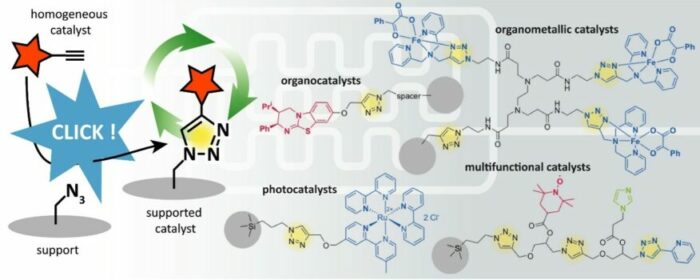
Catalysts are generally classified into three main categories: homogeneous, heterogeneous, and biocatalysts:

  • Homogeneous catalysts (from organocatalysts to organometallic catalysts) operate in the same phase as the reactants, typically in solution. They offer precise molecular-level control over catalytic properties, enabling the fine-tuning of activities and selectivities. However, despite these appealing features, their recovery and reuse remain challenging.
  • Heterogeneous catalysts operate in a different phase than the reactants, most commonly as solids interacting with gaseous or liquid reactants – the reaction occurring at the surface of the solid catalyst. Heterogeneous systems are robust, easily separated from the reaction mixture, and well-suited for large-scale continuous processes. Heterogeneous catalysts can be divided into unsupported (bulk) and supported In contrast to unsupported catalysts, supported catalysts feature an active phase dispersed on a high-surface-area solid support, which aims at increasing the exposed surface area and stability of the catalysts. In many systems, the support may also actively contribute to the activity and selectivity of the catalytic process
Some examples of ceramic and metallic catalytic foams
  • Biocatalysis utilizes whole cells (e.g., microorganisms such as bacteria and fungi) or isolated enzymes to catalyze chemical transformations. Operating under mild, aqueous conditions, biocatalysts can achieve remarkable chemo-, regio-, and stereoselectivities, often reducing or eliminating the need for protecting groups and complex purification steps. Advances in synthetic biology, metabolic engineering, and protein engineering have enabled the design of tailored whole-cell and enzyme biocatalysts – including enzyme variants optimized for immobilization on solid supports – with enhanced stability and performance, and even novel, new-to-nature reactivities, making biocatalysis increasingly important for efficient and sustainable industrial applications.

Catalysis @ Certech


Catalysis, across its many facets, is a strategic area of research and application at Certech. By combining longstanding expertise in catalysis with broad knowledge in organic and inorganic chemistry, material and surface chemistry, chemical engineering, and intensified and continuous processes, Certech supports industrial partners in developing and scaling up products and processes, from lab to pilot scale.

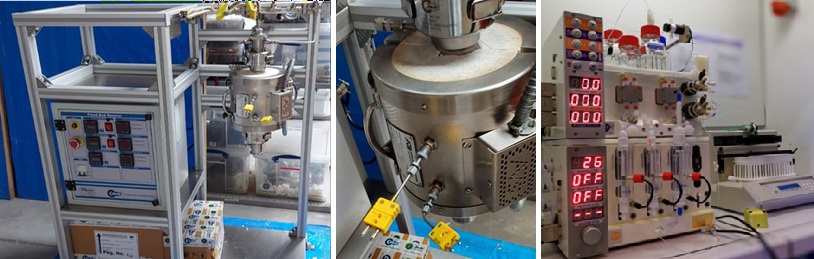
To support these developments, Certech operates well-equipped analytical and technological platforms that enable detailed catalyst characterization, performance evaluation, process optimization, and demonstration at relevant scales.